
How Contractors Can Stop Missing Calls (Without Hiring a Receptionist)
Short answer
Most homeowners call the next contractor on the list if nobody picks up, so a missed call is often a lost job. Fix it in layers: send an automatic text back to every missed call, call back within 15 minutes when you can, use a short voicemail that tells people what happens next, and let a bilingual answering service or AI receptionist pick up when you're on a job, after hours and on weekends.
Why missed calls hurt small contractors so much
When a pipe bursts or a ceiling stains, the homeowner usually calls a few contractors in a row. The first one who answers, or calls back fast, usually gets the visit.
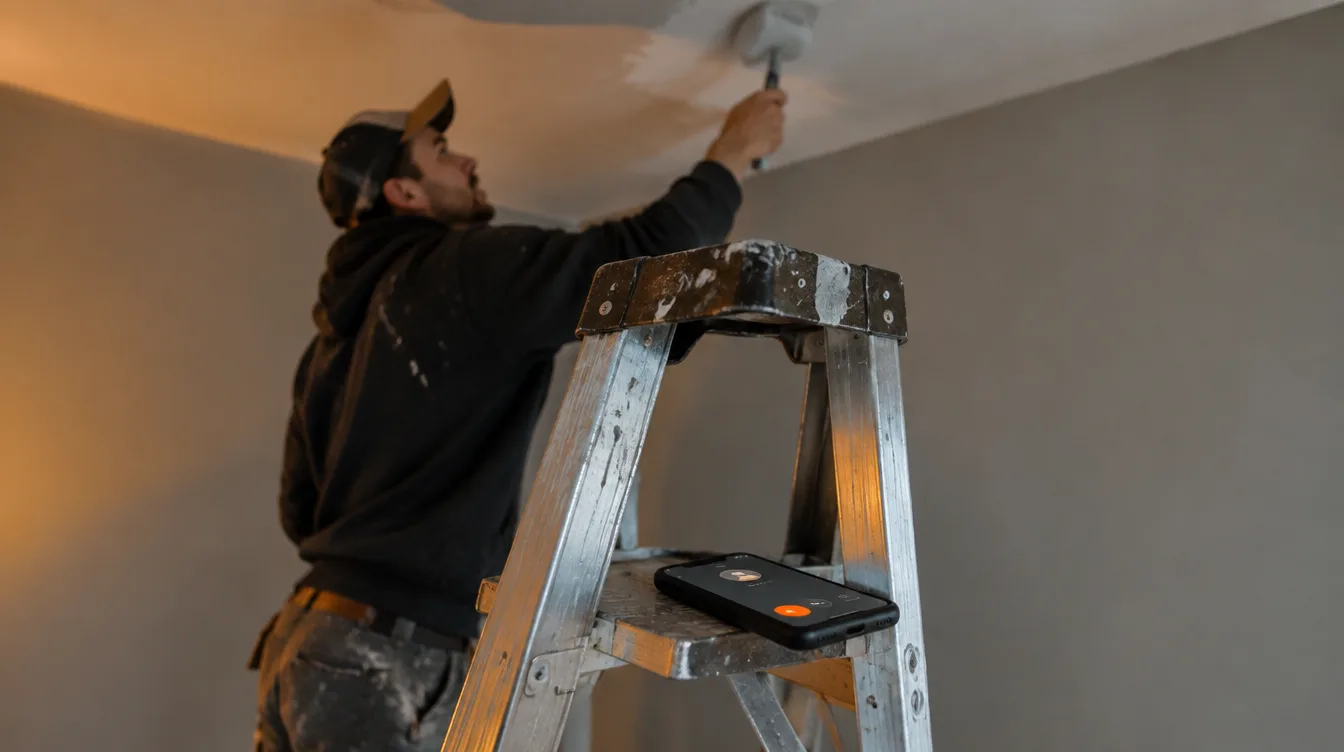
The problem is that the calls come while you're working: on a ladder, running a saw, under a sink, or driving. If you stop to answer every call, the job suffers. If you don't, the next job goes to someone else.
Step 1: Know how many calls you're missing
Before you buy anything, look at the last two weeks of your phone log:
- Count the missed calls from numbers you don't have saved.
- Note what time they came in (during jobs? after 6 pm? Saturday?).
- Check how many of those people left a voicemail. Many won't.
- Ask yourself how many you called back the same hour.
Step 2: Set up an automatic text-back
A text that goes out seconds after a missed call keeps the customer from dialing the next contractor. Keep it short and human, for example:
"Hi, this is Mike with ABC Drywall. I'm on a job right now. What do you need help with? I'll call you back shortly."
Many phone carriers and business phone apps can do this. Make sure the text comes from your business number so replies land in one place.
Step 3: Use a voicemail that tells people what happens next
"Leave a message" isn't enough. A good voicemail gives a reason to wait for you:
- Your name and company, so they know they called the right place.
- When you'll call back ("within the hour on weekdays").
- What to leave: name, address, what needs to be done, photos by text.
- A line in Spanish if you serve Spanish-speaking customers.
Step 4: Pick a call-back rule and stick to it
Choose a rule your whole crew knows, like "every new lead gets a call back within 15 minutes during work hours." Check your phone at natural breaks: after a mud coat, at lunch, when you load the truck.
Write down who called and what they need right away. A lead that lives only in your memory is a lead you'll forget by Friday.
Step 5: Let someone (or something) answer for you
When the volume grows, you need a real answer, not just a text. Your main options:
- Family member or office helper: personal, but limited to their hours.
- Live answering service: real people take messages; usually priced per minute or per call.
- AI receptionist: answers every call 24/7, can talk in English and Spanish, asks the right questions and can book the estimate visit.
- Whatever you pick, it should send you the caller's name, number, address and what they need in a text or app notification.
Example: what a missed-call fix can be worth (illustrative numbers only)
These numbers are made up to show the math; use your own.
- Say you miss 6 new-customer calls a week and half of those people call someone else.
- That's 3 lost estimate visits a week, about 12 a month.
- If you normally win 1 out of 3 estimates and an average job is $2,500, that's 4 jobs, or about $10,000 a month you never saw.
- Even winning back a part of that pays for most answering tools many times over.
How Andamia handles it
Andamia includes an AI receptionist that answers your business calls 24/7 in English and Spanish. It asks what the customer needs, filters out spam and sales calls, can book the visit on your calendar, and sends you the lead with a summary so you can call back when you come down the ladder.
The lead lands on the same board where you build the estimate, send the invoice and track the job, so nothing gets lost between your phone and your notebook. Other apps organize your jobs; Andamia also helps you get them.
Common questions
How fast should a contractor call back a new lead?
As fast as you can. Many contractors use a 15-minute rule during work hours. An automatic text right after the missed call buys you time.
Is an AI receptionist better than an answering service?
It depends. Live services give a human voice but usually charge per minute and take messages. An AI receptionist answers every call at any hour, can speak English and Spanish and can book appointments. Try both and see which your customers respond to.
Will customers hang up on an AI receptionist?
Some people prefer a human, but most callers mainly want a quick answer and a time for the visit. A clear greeting with your company name helps.
Should I use a separate business number?
Yes, if you can. It keeps customer calls and texts separate from personal ones and makes it easier to set up auto-texts, voicemail and call forwarding.
Do I need to answer calls in Spanish?
If you work in an area with Spanish-speaking homeowners or general contractors, answering in both languages can win you jobs other contractors miss.